Thursday, 3 March 2016

Friday, 2 October 2015
what happened in 1991 to Indian Economy?
Source: what happened in 1991 to Indian Economy?
Ten years ago, telecommunications services were a state monopoly and constituted a major bottleneck on the conduct of business activity. So callous was the attitude of the government that when a Member of Parliament complained about poor telephone service in Delhi during the early 1980s, the then telecommunications minister went on to remind him that in a poor country like India, the telephone was a luxury. The minister then added that if the Member was unhappy with the service, he could return his phone since many customers had queued up for it for years
Saturday, 26 September 2015
What factors are likely to thrive startups?
Things conducive for tech-statups:


Tel Aviv is densly populated
1.Education : well setup universities with quality education is the first requirement. for eg: statford university in the silicon valley,MIT in Boston
2.Roads and infrastructure: wide talent pool will be attracted from across the country if there are well developed roads and city life,which can be only be provided by Govt. of the day. eg ;New york and Tel Aviv
3. Cheaper Rent : cheper rent wether it be for setting statups or people who are working in startups definately groom up startup culture. for eg: Hong Kong have high rents which make it highly unlikely for statups.
4.Financial Inclusion : It is the backbone without which no statup can germinate.wether through Venture CApitalist or Angel investors the more they are the more startups. eg:San franciscoand New york have many VCs thus have high base for financial inclusion in new innovation.
5.Smaller City : City like berlin,Austin,Tel Aviv,Sao Paulo are smaller thus are well connected with better transportation system.
6.Extreme Condition : Isrel-Palestien conflict.People above 18 have military consciption in Israel during their 9 years compulsury service they are rigorously taught for 3 years in various fields like Coumputer Science and Military Hardware and software through programmes like Talpiot program" and 8200 this has been a boon for them.
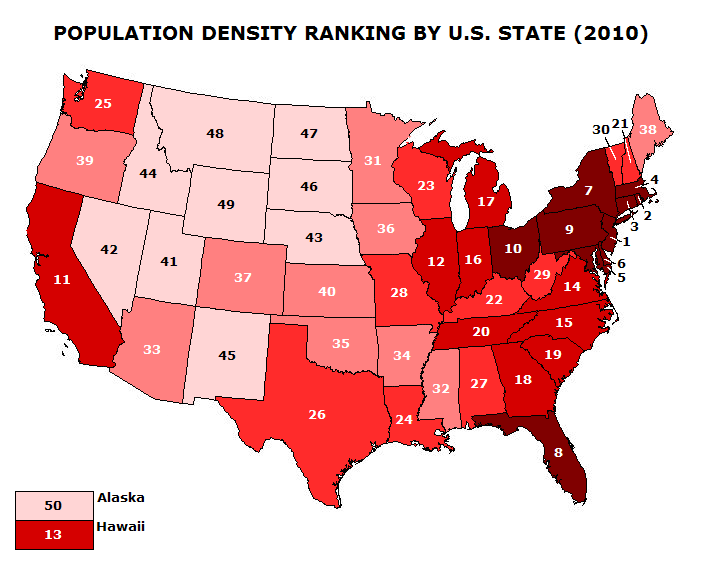
7.Population Density: it provide diverse variety of people with unique talent. the area around New york,Boston and Califonia are well populated
Tel Aviv is densly populated
thus it is clear that well populated are tend to be more friendly and are likely to thrive statups than their counterpart sparsely populated area.
Sources:top 10 startups
Sources:top 10 startups
Thursday, 24 September 2015
Where banks really make money on IPOs
Source:how investment banks make money
Source: by balaji
The lawsuit in question concerns the IPO of eToys, back in 1999. The company sold 8.2 million shares, raising $164 million; Goldman’s 7% fee on that amount comes to $11.5 million. If Goldman had sold the shares at $37 rather than $20, it would have received an extra $10 million — and what bank would willingly leave $10 million on the table?
eToys opened at $78 per share, which meant that Goldman’s clients were sitting on a profit of $475 million the minute that the stock started trading on the open market. In most cases, the clients cashed out — which was smart, because eToys didn’t stay at those levels for long. But if Goldman got back 40% of those profits in trading commissions, then it made $190 million in commissions, compared to that $11.5 million in fees.
Debt on Government of India(internal and external)
CONCEPT OF PUBLIC DEBT
Public debt refers to government debt. It refers to Government borrowings from individuals, financial institutions, organisations and foreign countries. If revenue collected through taxes and other sources is not adequate to cover expenditure, the government may resort to borrowings. Thus public debt is one of the instruments to cover deficits in budget.
Over the years, the public debt of Central Government and that of State Government’s has increased during the planning period. In short, public debt refers to “obligations of governments, particularly those evidenced by securities, to pay sums to the holders at some future date”. Borrowed funds are utilised for development and non-development activities. -
The following table shows the outstanding public debt of Central Government:-
CENTRAL GOVERNMENT DEBIT (Crore)
Debt
|
1990-91
|
2009-10
|
Internal.
External
|
1,54,004
31,525
|
23,37,682
1,39,581
|
Total
|
1,85,529
|
24,77,263
|
Source:- Economic Survey 2010-11
The Central Governments debt has increased by 13.4 times between 1990-91 and 2009-10. In 2009-10, the outstanding debt of Central Government was 40.4% of GDP. Internal debt was 35.8% and External debt was 2.1%.
B) CLASSIFICATION / TYPES OF PUBLIC DEBT
1) Internal And External Debt
a) Internal Debt :-
Government borrowings within the country are known as internal debt. Public loans floated within the country are called internal debt. The various internal sources from which the government borrows include individuals, banks, business firms and others. The various instruments of internal debt include market loans, bonds, treasury bills, ways and means advances etc. An internal debt may be either voluntary or compulsory. Internal debt imply a redistribution of income and wealth within the country and therefore it has no direct money burden. Over the years the internal debt of Central Government has increased from ? 1,54,004 crore in 1990-91 to Rs. 23,37,682 crore in 2009-10.
b) External Debt :-
Borrowings by the government from abroad is known as external debt. The external debt comprises of:- Multilateral borrowings, Bilateral borrowings, Loans from World Bank, Asian Development Bank, etc. External loans help to take up various developmental programmes in developing and underdeveloped countries. These loans are usually voluntary. Initially an external loan involves a transfer of resources from foreign countries to domestic country but, when interest and principal amount are being repaid a transfer of resources takes place in reverse direction. Over the years the external debt of Central Government has increased from Rs.31,525 crore in 1990-91 to Rs. 1,39,581 crore in 2009-10.
2) Short Term. Medium Term And Long - Term Debt :-
a) Short Term Debt :-
Loans for a period of less than one year are known as short - term debt. For Eg. The treasury bills are issued by RBI on behalf of the government to raise funds for a period of 91 days and 182 days. Interest rates on such loans are very low. To cover the temporary deficits in budget short - term loans are taken.
b) Medium - Term Debt
The period of medium term debt is normally for a period above one year and upto 5 years. One of the main forms of medium term debt is by way of market loans. The interest rates on medium term loans are reasonable. These are preferred to meet expenditure on health, education, relief work etc.
c) Long - Term Debt
Loans for a period exceeding 5 years are called long - term debt. One of the main forms of long term loans is by way of issue of bonds. Long term debt is required for the purpose of retirement of debts and also for the purpose of development projects.
3) Productive And Unproductive Debt
a) Productive Debt
Public debt is said to be productive when it is raised for productive purposes and is used to add to the productive capacity of the economy. These loans are normally long - term in nature. These loans are utilised on development activities such as infrastructure development like roadways, railways, airports, seaports, power generation, telecommunications etc. The productive debts are self - liquidating in nature, this means the principal amount and interest are normally paid out of the revenue generated from the projects to which the loans were utilised.
b) Unproductive Debt
An unproductive debt is one which does not yield any income. It does not add to the productive assets of the country. For Eg. debts utilised for transfer payments in form of subsidies, old age pension, special incentives to weaker sections etc. Unproductive public loans are a net burden on the community. The government will have to resort to additional taxation for their servicing and repayment.
4) Compulsory And Voluntary Debt
a) Compulsory Debt
Normally, the government does not obtain funds through compulsory means. The government may obtain such loans from banks, financial institutions and large corporate firms at time of war or major disaster, only when it is not possible to obtain voluntary debt. In India, Compulsory Deposit Scheme is an example of compulsory debt.
b) Voluntary Debt
Generally, public loans are voluntary in nature. The voluntary debt may be obtained in the form of Market loans, bonds etc. People invest in voluntary debts from the point of view of liquidity and profitability. The rate of interest is normally higher than that of compulsory debt.
5) Redeemable And Irredeemable Debt
a) Redeemable Debt
Loans which government promises to pay off at some future date are called redeemable debts. Their maturity period is fixed. The government has to make arrangements to repay the principal and interest on due date. These loans are repaid out of revenue receipts of government or by raising further loans.
b) Irredeemable Debt
Loans for which no promise is made by the government regarding their exact date of repayment are called irredeemable debts. Such debt has no maturity period. The government may pay interest regularly. Normally, government does not resort to such borrowings.
6) Funded And Unfunded Debt
a) Funded Debt
Funded debt is normally obtained on long - term basis. The interest on funded debt must be paid regularly. But the government has the option to repay the principal. If market conditions are favourable government may repay it before maturity. Funded debt comprises of securities which are marketable on stock exchange.
b) Unfunded Debt
Unfunded debts are of short term. They are also known as floating debt. Unfunded debts are incurred to meet temporary needs of the government. The rate of interest is low. There is no special fund created to repay this debt.
Q.2): Explain the trends and composition of public debt in India. OR
Explain the debt obligation of Central Government.
Ans. A) COMPOSITION AND GROWTH I TRENDS OF PUBLIC DEBT IN INDIA
During recent years public debt in India has been growing at an alarming rate, with the budget deficit increasing significantly. Debt obligation of Central Government are divided into internal liabilities and external debts. The following are the various components of public debt :-
(I) Internal Debt:-
Internal debt refers to loans raised from open market. Internal debt of Central Government has increased from Rs.1,54,004 crores in 1990-91 to Rs.23,37,682 crores in 2009-10.
INTERNAL DEBT LIABILITIES OF GOVERNMENT OF INDIA
Year
|
Rs. Crore
|
% of GDP'
|
1990-91
2009-10
|
1,54,004
23,37,682
|
28.8
35.7
|
Source:- Economic Survey 2010-11
Internal debt includes the following:-
1. Market Loans :-
Market loans have a maturity period of 12 months or more and they generally bear interest. These loans are raised in the open market by sale of securities or otherwise. Market loan stood at 17,34,505 crore in 2009-10.
2. Treasury Bills
This is a major source of short term funds for the government to bridge the gap between revenue and expenditure. They have a maturity of 91 days, 181 days and 364 days Treasury bills are issued to the Reserve Bank of India, State Governments, Commercial Banks and other parties.
3. Securities Against Small Savings :-
Under the new Accounting System of National Small Savings Funds (NSSF), a substantial part of small savings have been converted into Central Government Securities from the year 1999 - 2000. As a result, there has been a sharp rise in internal debt and the corresponding decline in other liabilities in form of small savings.
4. Special Securities Issued Bv RBI :-
The Government obtains temporary loans for a period of maximum 12 months from RBI and issues special securities, which are non-negotiable, and non-interest bearing.. Such securities provide short term funds to the Government.
5. Special Floating And Other Loans :-
It refers to the contribution of government towards the capital of International Financial Institutions such as International Monetary Fund, International Bank for Reconstruction and Development, and International Development Association. These are non - negotiable and non - interest bearing securities and the Government of India is supposed to make repayment at the call of these institutions.
6. Bonds And Expired Loans :-
It comprises balance of expired loans, gold bonds and compensation and other bonds such as National Rural Development Bonds, Central Investment Bonds. The bonds are issued at different maturityperiods which may range from 3 year to 10 year period
7. Ways and means Advances:-
The government of India takes ways and means advances from RBI to meet its short period expenditure.
II) Other Internal Liabilities
Apart from internal borrowings, the government also obtains funds from following :-
1) Small Savings :-
Schemes like National Savings Certificates, National Savings Scheme etc. contributed to rise in small savings. These schemes provide tax concessions to tax payers. As a result they have been successful in attracting more funds in small savings.
2) Provident Funds :-
Provident funds are divided into two categories State Provident Fund and Public Provident Fund. Deposits in Public Provident Funds are repayable after 15 years.
3) Reserve Funds And Deposits :-
Reserve Funds and Deposits are divided into two categories - interest bearing and non interest bearing. They include depreciation and reserve funds of railways and department of posts and department of telecommunications, deposits of local funds, departmental and judicial deposits, civil deposits etc.
III) External Debt
The government obtains funds not only from internal sources but also from external sources. External debt has increased from Rs.31,525 crore in 1990-91 to Rs. 1,39,581 crore in 2009-10.
EXTERNAL DEBT OUTSTANDING OF CENTRAL GOVERNMENT
Year
|
Rs Crore
|
% of GDP
|
1990-91
2009-10
|
31,525
1,39,581
|
5.9
2.1
|
Source :- Economic Survey 2010-11
|
According to Global Development Finance Report 2009, India is ranked as 7th largest debtor country in the world. This is a huge burden.
Long Term Debt comprises of Multilateral borrowings, Bilateral borrowings, loans from World Bank etc. The government also borrows funds from external sources for short-term period. In 2009-10, the short term external debt was about 20% of total external debt of Central Government.
Q. 3 : Discuss the burden of public debt. OR
Explain the burden of Internal and External debt.
Ans. A. BURDEN OF PUBLIC DEBT
To meet various expenses government borrows funds by way of public debt. Over the years the Central Government’s Outstanding debt has increased by 13.4 times between 1990-91 and 2009-10. public debt puts a burden on the economy on account of repayment of principal amount and interest. Both internal as well as external debt carries a burden on the economy.
(I) Burden Of Internal Debt
Internal debt puts burden on the citizens and on the social and economic development of the nation. Internal debt constitutes a redistribution of resources within the community. There is no change in total resources of the country. The burden of internal debt is explained as follows
1. Direct Money Burden
There is no direct money burden on the country as the repayment of principal amount and the interest involves a transfer of purchasing power from one set of people to another within the country. Thus the aggregate position of the community remains the same.
2. Direct Real Burden
The direct real burden is on the economy. It is measured in terms of loss of welfare suffered by the citizens depending upon the proportion in which various members of the society contribute towards repayment of loan and interest. Some economists argue that the direct real burden falls on future generations.
3. Indirect Real Burden
Internal debt also has indirect real burden. Higher taxes may de-motivate the tax payers to work hard for higher incomes. This may have an adverse effect on productive activities in the country.
4. Inflation
If indirect taxes are raised for repayment of internal debt, then inflation may take place. Inflation will reduce the purchasing power of the poor.
5. Unjustified Transfers
The servicing of internal debt involves transfer of income from younger generations to older generations and from active to inactive enterprises.
6. Effect On Private investment
Internal debt may indirectly affect private investment. Internal debt involves huge interest payments. Therefore, lesser funds are available with the Government for development activities such as infrastructure. Lack of infrastructure development discourages private investment, which affects economic growth.
7. Effect On Social Development
Due to internal debt, there is higher interest burden. Higher burden results in availability of lower funds towards social development activities like health, education, family welfare, etc.
(II) Burden Of External Debt
External debt is beneficial in the initial stages as it increases the resources available to the country. But its repayment and servicing creates a burden on the debtor country.
1. Direct Money Burden
External debt creates direct money burden. This is because it involves transfer of funds from the debtor country to foreign citizens. The degree of burden depends upon the interest rate and loan amount.
2. Direct Real Burden
Direct real burden is the loss of economic welfare i.e. the sacrifice of the consumption of goods and services due to increased taxation. I The foreign currency earned through exports would have been utilised to import better goods and technology, which would have increased the I economic welfare of the citizens of debtor country. But because of external I debt repayment, they have to restrict their welfare which the imported I goods would have provided.
3. Indirect Money And Real Burden
This is measured in terms of effects on production and allocation of resources. To repay public debt, the government may increase taxes or reduce public expenditure. These will cause reduction in production I and consumption. This is indirect money and real burden of external debt.
4. Problem Of Debt Trap
Certain countries borrow heavily from external sources. Quite often, borrowed funds are utilised for non development and unproductive purposes. Sometimes, highly indebted countries borrow funds to repay the earlier debts. Such heavy borrowings to repay earlier debts put highly indebted countries in external debt trap. Recent example of 2010 crisis are European nations such as Portugal, Italy, Span and Ireland. Also Dubai debt crisis did have an effect on International community.
5. Burden Of Unproductive Foreign Debt
If the external debt is incurred for unproductive purposes, it will create a greater burden and sacrifice on the citizens of the debtor country.
6. Burden On Foreign Exchange Reserves
The repayment of external debt puts a burden on foreign exchange reserves of a country. During international crisis, there is often a contagion (spreading) effect, this means, if one country is affected, the other countries are also affected. Thus it is advisable to have good foreign exchange reserves, so that the country does not come into contagion effect, as the investors will have confidence in the economy and may not withdraw their investment.
7. Domination Bv Creditor Country
The creditor country may dominate the debtor country in various spheres. The debtor country may be forced to take decisions which may generate more benefits to the creditor country.
B. CONCLUSION
Thus from above we can say that internal as well as external debt create burden on the community. Internal debt is considered less burdensome as compared to external debt.
Sources: debt report 2010
Sources: debt report 2010
 |
| pic:Jurisdiction of govt debt management agencies |
Small savings schemes are designed to provide safe and attractive investment options to the public and at the same time to mobilise resources for development.These schemes are operated through about 1.54 lakh post offices throughout the country. Public Provident Fund Scheme is also operated through about 8000 branches of public sector banks in addition to the post offices. Deposit Schemes for Retiring Employees are operated through selected branches of public sector banks only.


Subscribe to:
Comments (Atom)